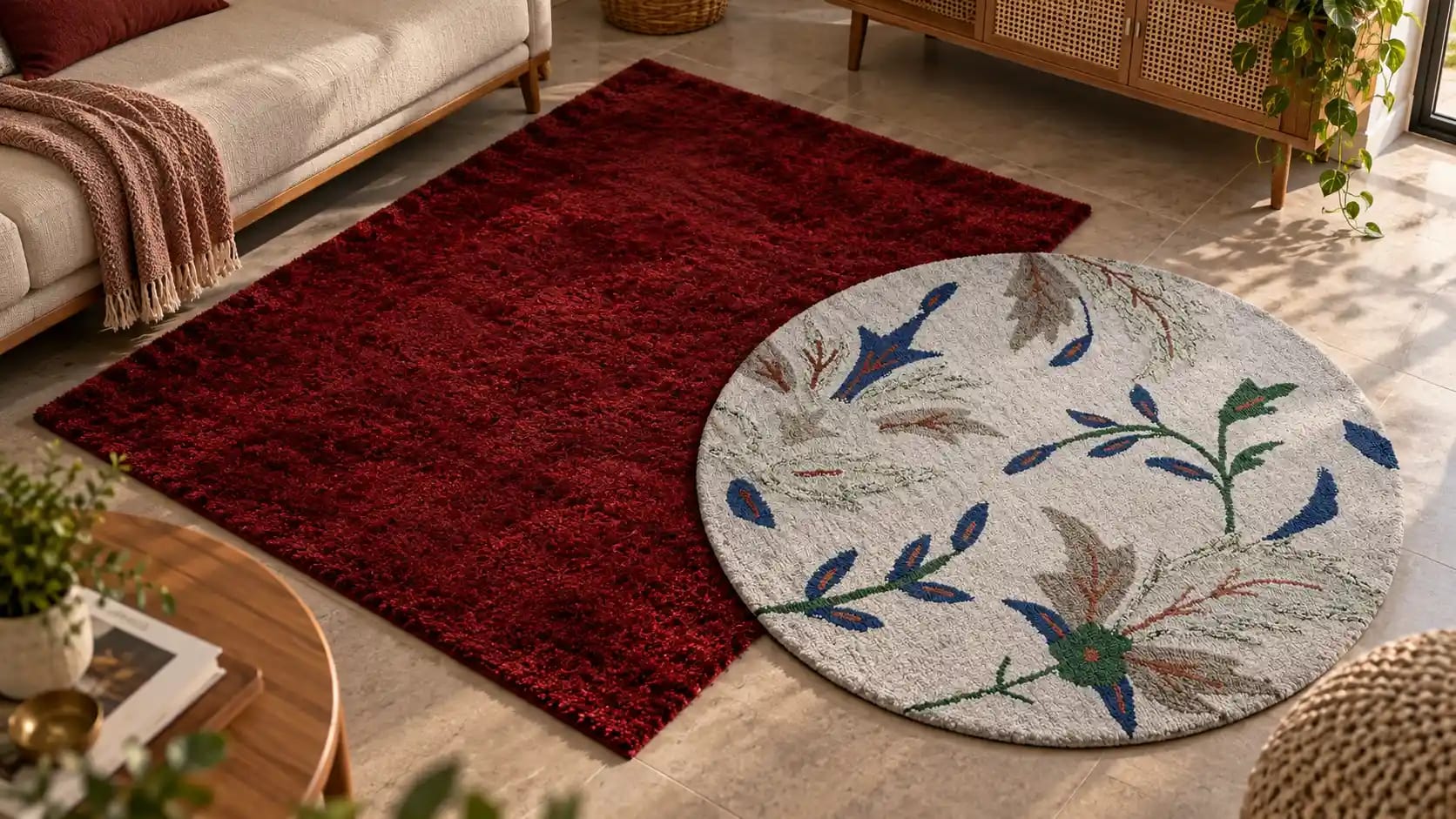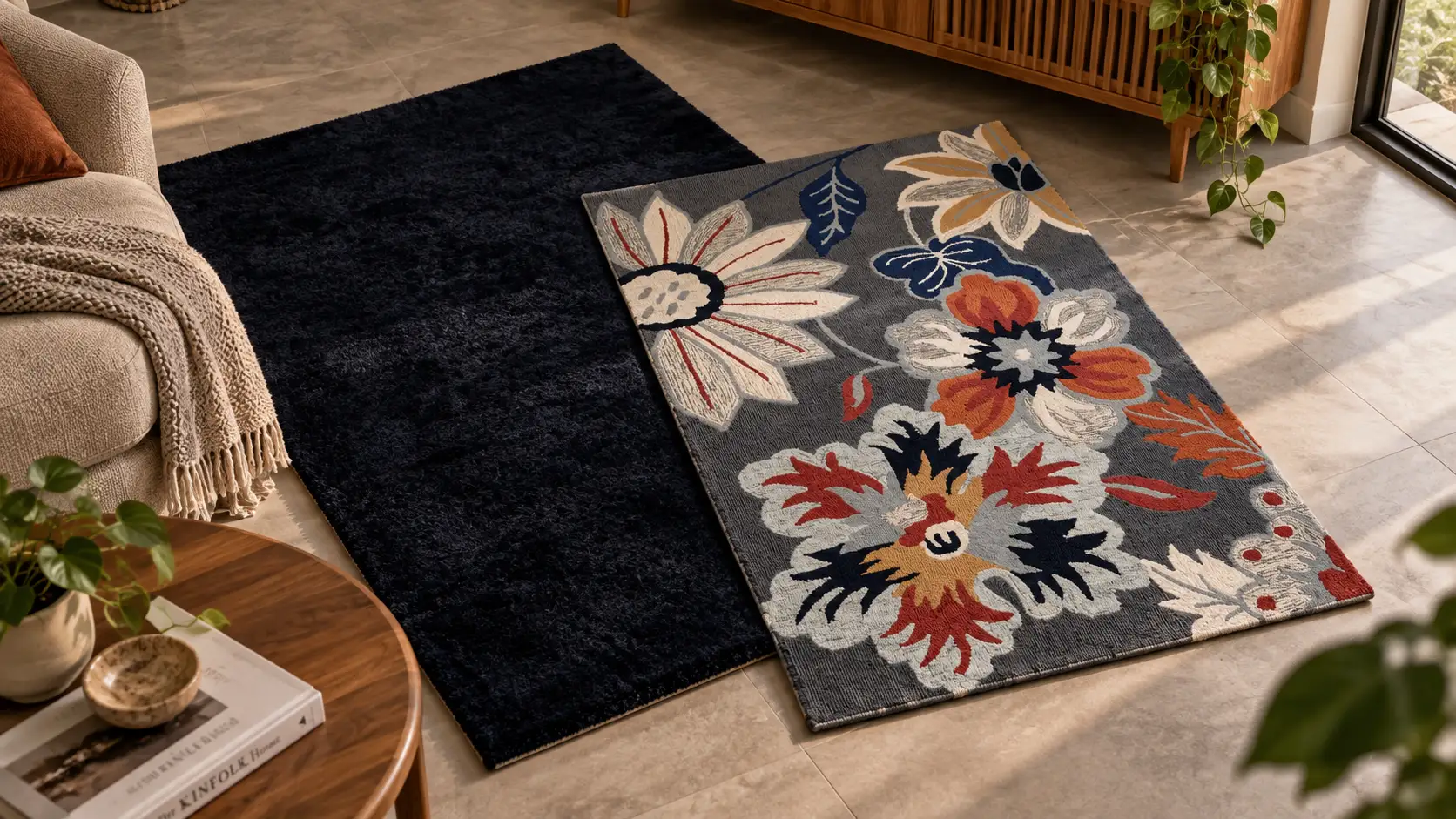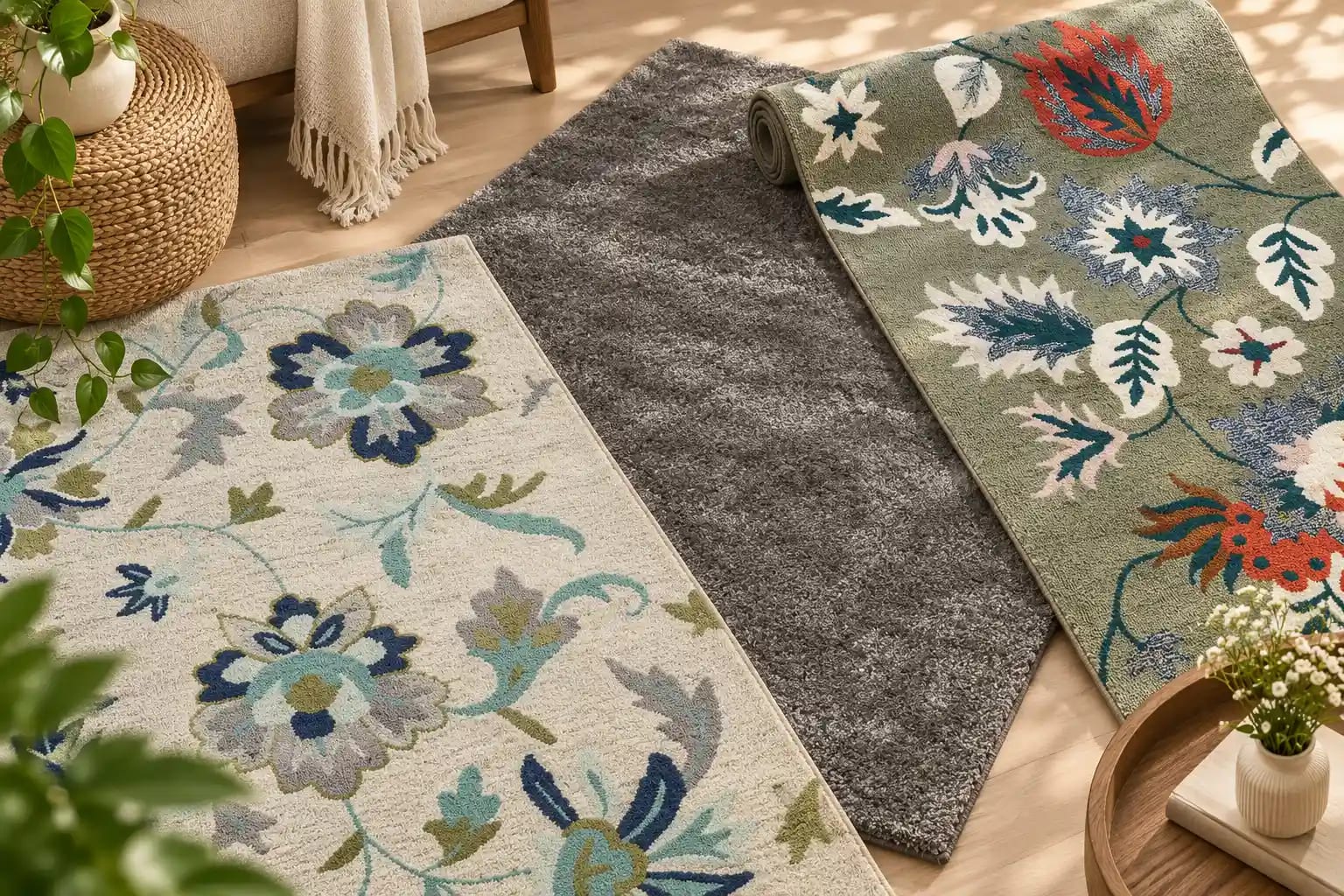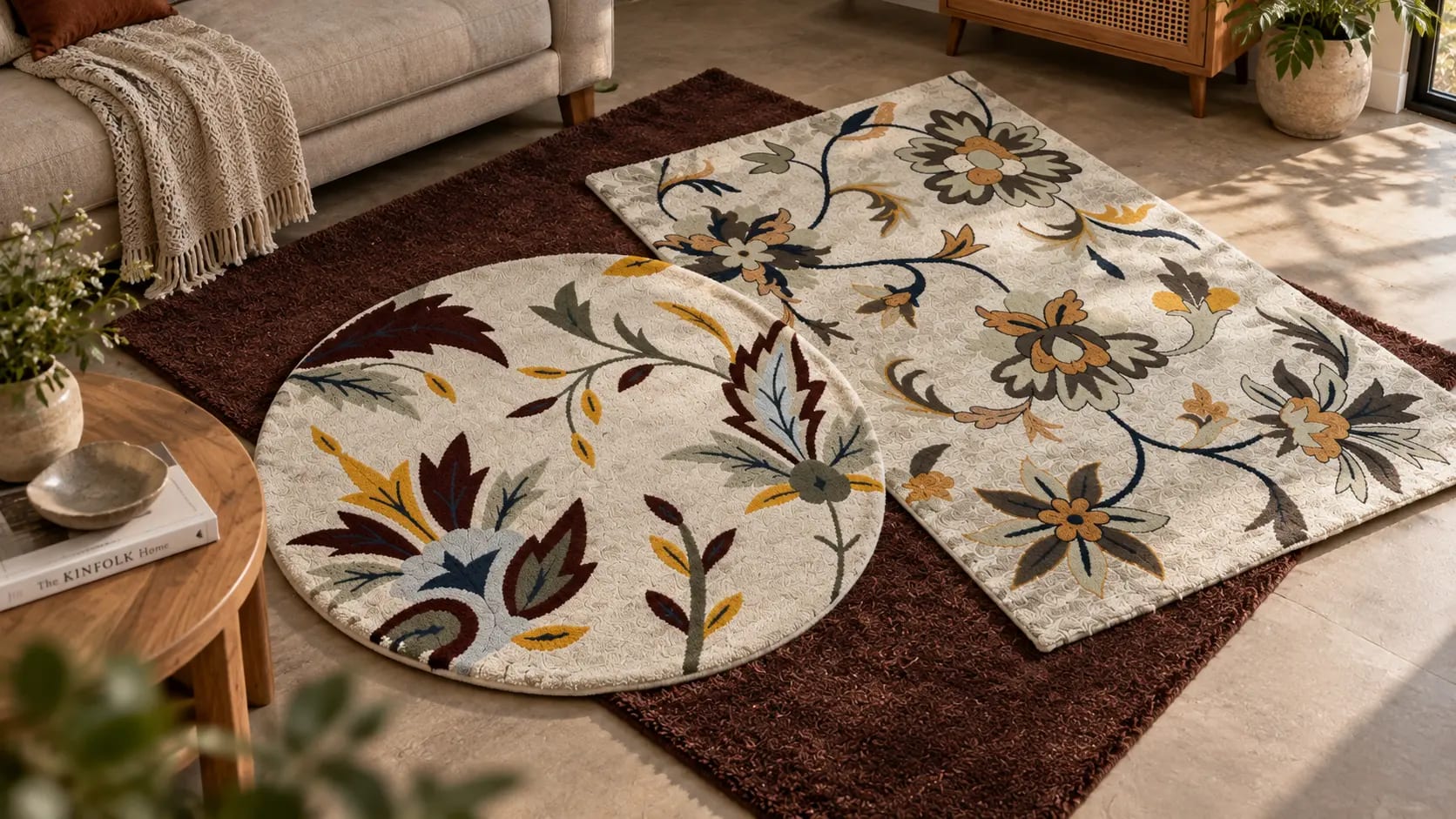
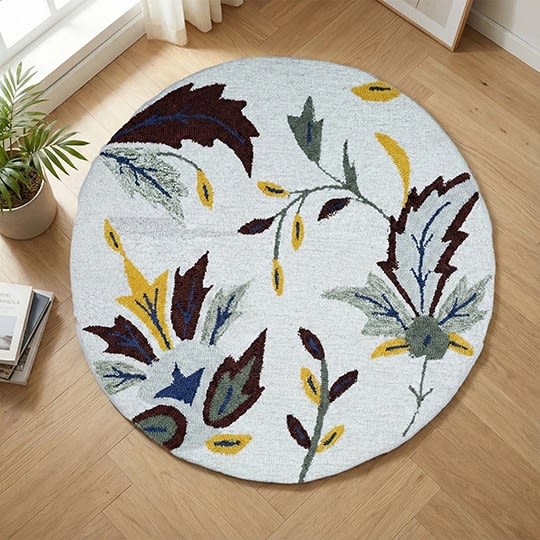
A beautiful carpet can change the feeling of a room almost instantly. It can soften a space, bring warmth to a large living area, add character to a quiet bedroom, or become the visual centre of an otherwise simple interior. But when you look beyond the finished rug, there is a much bigger story.
That story begins long before the carpet reaches a home.
It starts with the selection of fibres, the development of a design, the preparation of yarn and, in the case of handmade pieces, the patient work of skilled artisans. Every knot, colour and finishing detail contributes to what eventually becomes part of an interior.
India has a particularly interesting place in this world. Its carpet industry brings together generations of weaving knowledge, regional craft traditions and modern manufacturing capabilities. At the same time, today's buyers are looking for something more than an attractive pattern. They want quality, durability, individuality and, increasingly, products that can be made according to the needs of a particular space.
This is where choosing the right manufacturer or supplier becomes important. A carpet isn't something most people replace every few months. When you invest in a well-made piece, you're choosing something that may stay with your interior for years.
Why Indian Carpets Still Have a Place in Modern Luxury
Luxury interiors have changed considerably over the years. The old idea that luxury simply meant expensive materials and elaborate decoration has given way to something more thoughtful.
Today, a well-designed luxury space often feels balanced rather than excessive. Texture matters. Proportion matters. The quality of individual pieces matters. And a carpet can quietly bring many of these elements together.
Indian carpets fit naturally into this approach because the country's carpet-making heritage offers an unusual combination of craftsmanship and design flexibility. Traditional techniques continue to influence modern products, while contemporary manufacturers are creating pieces suited to today's homes, hotels, offices and designer projects.
There is also something inherently appealing about handmade craftsmanship. A machine can reproduce a pattern with remarkable precision, but a handwoven carpet carries evidence of the person who made it. Small variations in texture, colour and knotting can give the finished piece a character that feels less manufactured.
That doesn't mean every handmade carpet is automatically better than every machine-made carpet. Quality still depends on materials, construction, finishing and workmanship. The important point is that buyers now have access to a much wider range of choices.
For interior designers and decorators, this flexibility can be particularly useful. A carefully selected rug can connect furniture, flooring, wall colours and decorative elements without dominating the entire room.
The result is often subtle. You may not immediately notice why a room feels complete, but the carpet is frequently doing more work than you realise.
Behind Every Rug Is a Process, Not Just a Product
Walk into a showroom and a finished carpet can look deceptively simple. You see the pattern, colours, shape and texture. What you don't see immediately is everything that happened before it arrived there.
The process starts with decisions about materials.
Different fibres create different experiences underfoot and behave differently over time. Wool is known for its resilience and natural texture. Viscose can provide a soft, lustrous appearance. Jute brings an earthy character, while blended fibres can be selected to achieve particular performance or visual qualities.
Then comes design.
A pattern isn't simply printed onto every handmade carpet. Depending on the construction, the design may be carefully translated into a weaving process where the artisan builds the pattern section by section. Colours must be selected, yarns prepared and proportions considered.
For handmade pieces, the artisan becomes an important part of this process.
Experience matters because weaving isn't simply about following instructions. Skilled workers understand tension, knotting, colour transitions and finishing techniques. They can recognise subtle problems during production and make adjustments before those problems affect the final result.
This is one reason why two carpets based on the same design can still have slightly different personalities.
For buyers, understanding this process changes the way you look at a rug. Instead of seeing it simply as another home accessory, you begin to appreciate the amount of planning and labour involved.
That perspective also helps explain why comparing carpets only by size and price can be misleading. Two rugs of identical dimensions can have very different construction, material quality and expected lifespan.
The Craftsmanship Behind Wool Hand Knotted Rugs
Wool has been associated with quality rugs for centuries, and there's a practical reason for that reputation.
Good wool offers a useful balance of softness, resilience and durability. It can handle regular use while maintaining a rich, natural appearance when properly cared for. Its texture also works beautifully in interiors where warmth and depth are important.
Hand knotting takes that material and turns it into something much more detailed.
In a hand-knotted rug, individual knots are tied around the foundation of the carpet. The density and type of knotting influence the appearance, texture and construction of the finished piece. More intricate designs can require considerable time and skill.
This is where wool hand knotted rugs become particularly interesting for buyers who appreciate craftsmanship.
The attraction isn't simply the word "handmade." It's the combination of material and technique. Quality wool provides the foundation, while skilled knotting allows intricate patterns and detailed designs to take shape.
Of course, not every wool rug is constructed to the same standard. Buyers should pay attention to the quality of the wool, knot density, backing, finishing and overall workmanship.
It's also worth considering where the rug will be used.
A highly decorative piece may be ideal for a formal living room or bedroom, while a family space with constant foot traffic may require a construction designed for more regular use.
The best rug isn't necessarily the most expensive one. It's the one whose materials and construction make sense for the environment in which it will live.
Hand Knotted Woolen Carpets and the Value of Time
One of the easiest things to overlook when buying a handmade carpet is time.
We live in a world where products are often expected to be made quickly. A design is created, manufactured in large quantities and shipped almost immediately. Handmade weaving works differently.
A detailed hand-knotted carpet can take a significant amount of time because the construction depends on repeated individual knots and careful handling of the design.
Hand knotted woolen carpets are a good example of how time becomes part of the product itself.
The artisan must maintain the structure of the carpet while gradually building its pattern. Intricate motifs, closely spaced details and larger dimensions can all increase the amount of work involved.
There's also a human element to consistency. Experienced artisans develop an understanding of the material that comes from years of practice. They know how yarn behaves, how tension affects the weave and how small adjustments can influence the final appearance.
This is why handmade rugs often have subtle differences that shouldn't automatically be treated as flaws. Minor variations can be evidence of the handmade process.
For collectors and design-conscious buyers, that's part of the charm.
The value of a handcrafted carpet isn't only found in the finished appearance. It is also found in the skill, labour and time invested in creating it.
From Traditional Motifs to Contemporary Carpet Designs
Indian carpet design has deep connections with traditional motifs, but today's interiors aren't limited to traditional aesthetics.
Modern buyers may want geometric patterns, understated neutrals, abstract artwork, floral designs or minimalist textures. Some prefer classic Persian-inspired arrangements, while others want something that feels completely contemporary.
Manufacturers have responded by expanding the range of designs available.
This evolution is important because a carpet needs to work with the architecture and furniture around it. A beautiful rug can still feel wrong if its scale, colours or pattern fight against everything else in the room.
For example, a large room with neutral furniture might benefit from a patterned statement rug. A visually busy room may need something quieter, using texture rather than an elaborate motif to create interest.
Colour deserves similar attention.
A carpet doesn't necessarily need to match the sofa or curtains exactly. In fact, exact matching can sometimes make an interior feel too coordinated. A better approach is often to choose colours that connect different elements of the room.
Traditional craftsmanship and contemporary design don't have to compete with each other. They can work together surprisingly well.
A classic weaving technique can produce a modern geometric design. A traditional floral idea can be simplified into a cleaner contemporary pattern. Natural wool can become the foundation for a minimalist interior.
That's one of the strengths of India's carpet-making tradition. It has enough history to offer depth, but enough flexibility to keep evolving.
Why the Right Manufacturer Matters More Than the Lowest Price
Price is an important consideration, but it shouldn't be the only one.
When buying a carpet, especially in larger quantities or for a professional interior project, the real question is what you're receiving for that price.
A cheaper carpet may look attractive initially, but poor materials, weak construction or inadequate finishing can become obvious with use. On the other hand, paying more doesn't automatically guarantee better quality.
The key is transparency.
A reliable manufacturer should be able to explain the material composition, construction method, dimensions and finishing details of the carpet. If you're ordering a custom piece, they should also be clear about the expected production timeline and specifications.
Samples can be extremely useful.
Colours and textures can look different under showroom lighting, natural daylight and warm indoor lights. Designers often benefit from seeing a physical sample before approving a larger order.
Communication matters too.
If you're working on a hotel, residential development or large interior project, delays can create problems far beyond the carpet itself. Furniture installation, photography, handover dates and other stages of a project may depend on a reliable delivery schedule.
This is why experienced carpets and rugs manufacturers in India can become valuable long-term partners rather than simply vendors.
The relationship becomes particularly important when a project involves repeated orders, custom dimensions or specific design requirements.
Carpet Suppliers in India: What Should Buyers Look For?
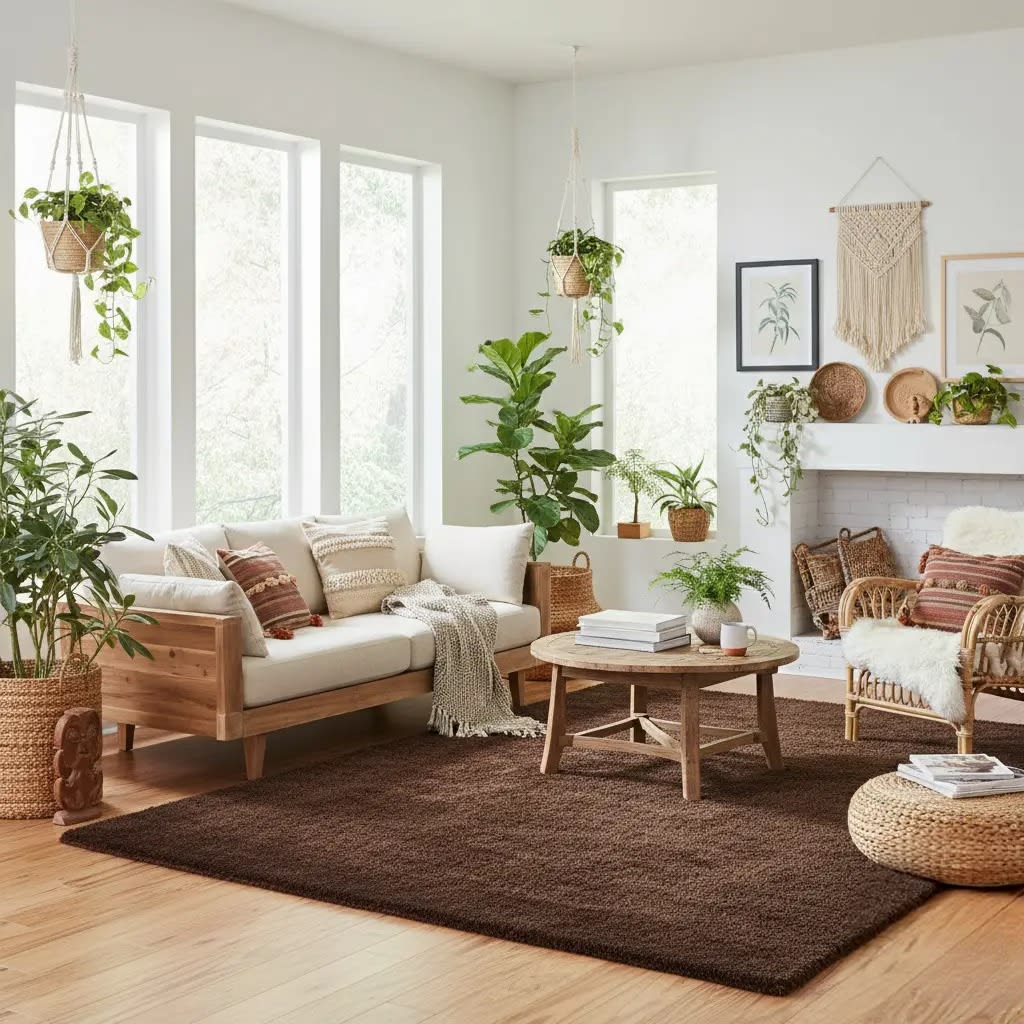
Manufacturers and suppliers don't always serve the same role.
A manufacturer is directly involved in production, while a supplier may source products from different manufacturers and make them available to buyers. Depending on the project, either can be useful.
The important thing is to understand who you're buying from and what they can actually provide.
Before placing a significant order, ask about the materials, construction, available sizes and customisation options. If you're sourcing handmade pieces, ask how the carpets are made and what kind of finishing they receive.
For businesses and interior designers, consistency is another major consideration.
If you need ten or twenty carpets for the same project, they need to maintain a consistent look. Slight handmade variations can be acceptable, but significant differences in colour, dimensions or construction can create problems.
Reliable carpet suppliers in India should also be able to communicate clearly about quantities, lead times, packaging and shipping.
Another useful step is to request samples or previous project references where possible. Seeing how a supplier's products perform in real interiors can provide information that a product photograph simply can't.
In short, don't evaluate a supplier only by their catalogue. Evaluate their ability to deliver what your project actually requires.
Bhadohi and the Heritage of Indian Carpet Manufacturing
When people talk about India's carpet industry, Bhadohi naturally enters the conversation.
Located in Uttar Pradesh, Bhadohi is widely recognised for its long-standing connection with carpet weaving and has developed a strong ecosystem around the craft. Generations of artisans have contributed to the region's reputation, helping preserve weaving knowledge while supporting a large carpet-making industry.
The importance of Bhadohi isn't only historical.
The region represents how traditional craft can develop into a major manufacturing ecosystem. Skills passed through generations continue to influence products that reach homes and commercial spaces in India and overseas.
This is one reason buyers researching carpet manufacturers in Bhadohi may encounter a broad range of products, materials and construction techniques.
However, the same principle applies here as anywhere else. A famous manufacturing region doesn't automatically guarantee that every carpet will meet your expectations.
Buyers should still assess individual manufacturers based on craftsmanship, material quality, construction, finishing, communication and service.
The bigger story is that India's carpet industry isn't built around one technique or one region. Bhadohi is an important part of the story, but Indian carpet craftsmanship has developed across multiple regions and communities.
That diversity is part of what makes Indian carpets so interesting.
What Makes a Carpet Truly Luxury?
Luxury is often confused with price.
A rug can be expensive and still feel poorly suited to a room. Conversely, a carefully selected carpet can make a space feel refined without being the most expensive object in it.
True luxury usually comes from a combination of details.
Material quality is one factor. Construction is another. The precision of the design, the finishing, the texture and the way the carpet interacts with the room all contribute to the experience.
There is also longevity.
A carpet that looks beautiful for six months but quickly loses its appearance isn't necessarily a smart luxury purchase. A well-made rug that develops character while remaining structurally sound can offer much greater long-term value.
Texture is another important element.
Luxury interiors often use a mixture of surfaces rather than relying on visual decoration alone. A textured carpet can create contrast against polished flooring, smooth furniture or hard architectural surfaces.
This is where craftsmanship becomes particularly noticeable.
Run your hand across a well-made handmade carpet and you'll often notice details that don't appear clearly in a photograph. The pile, density and natural variation create a tactile quality that contributes to the overall atmosphere of a room.
Luxury doesn't have to shout.
Sometimes it's the quiet quality of a material, the balance of a pattern and the way everything fits together that makes a space feel expensive.
Choosing the Right Carpet for a Luxury Interior
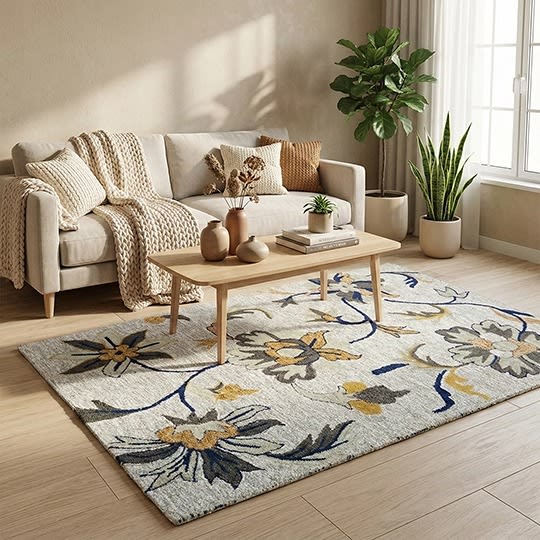
Choosing a carpet starts with the room, not the catalogue.
Before falling in love with a particular design, consider the dimensions and layout of the space.
A rug that's too small can make furniture appear disconnected. One that's too large can overwhelm the room or cover architectural features that should remain visible.
Furniture placement matters too.
In a living room, a larger rug can help visually connect sofas and chairs. In a bedroom, the carpet may be positioned to create a soft landing around the bed. Dining areas require careful attention to size so chairs remain on the rug even when pulled away from the table.
Then comes material.
Wool can be an excellent option where durability and natural texture are priorities. Viscose can add sheen and softness. Jute can introduce a more organic look. Blended materials can provide specific combinations of appearance and practicality.
The right choice depends on the environment.
A formal sitting room has different requirements from a busy family area. A hotel lobby has different demands from a bedroom.
Pattern should be considered in the same way.
If the furniture already has strong shapes or prints, a calmer carpet may work better. If the room is mostly neutral, a distinctive rug can become the piece that gives the space personality.
And don't forget lighting.
A colour that looks cool in a showroom may appear warmer under the lighting in your home. Whenever possible, examine samples in the actual room before making a final decision.
Custom Carpets: When Standard Sizes Are Not Enough
Not every room fits neatly into a standard carpet size.
Architectural layouts can include unusual dimensions, open-plan areas, curved furniture arrangements and spaces where a ready-made rug simply doesn't sit correctly.
That's where custom carpets become valuable.
A custom rug can be designed around the dimensions and furniture arrangement of the room. Instead of forcing the interior to accommodate the carpet, the carpet can be developed to support the interior.
Designers may also require custom colours, patterns, materials or combinations of different textures.
This flexibility can make a significant difference in premium residential and commercial projects.
The key is communication.
When ordering a custom carpet, provide accurate dimensions and explain exactly how the rug will be used. If possible, share drawings, reference images or furniture layouts. The more clearly the manufacturer understands the project, the easier it becomes to produce something that fits the intended space.
It's also important to discuss samples before production when colour accuracy matters.
A custom carpet represents more commitment than buying something from a shelf. Taking time at the specification stage can prevent expensive mistakes later.
From the Workshop to the Living Room
The manufacturing process doesn't end when the weaving is complete.
Finishing and inspection are important stages because the carpet needs to be prepared for its final use.
Depending on the construction, finishing can involve trimming, cleaning, edge work and other processes that improve the final appearance and usability of the rug.
Quality inspection is equally important.
Dimensions should be checked, colours reviewed and visible construction issues identified before the carpet is packed for delivery.
For larger projects, packaging and transportation become important too. A carefully made carpet can still arrive in poor condition if it isn't handled correctly during shipping.
Once the carpet reaches its destination, buyers should inspect it before installation or placement.
Check the dimensions, surface, edges and overall appearance. If the carpet has been custom-made, compare it against the approved specifications.
Then comes the most satisfying part.
Place it in the room.
A well-chosen carpet can suddenly make furniture feel connected, soften hard surfaces and give the entire interior a stronger sense of identity.
That's when all the work behind the product becomes visible.
Making a Carpet Last for Years
Even a well-made carpet needs proper care.
Regular vacuuming is one of the simplest ways to maintain it. Dust and small particles can work their way into the fibres over time, particularly in areas with regular foot traffic.
However, aggressive cleaning can do more harm than good. The cleaning method should always be appropriate for the carpet's material and construction.
Spills should be addressed quickly rather than left to become permanent stains. Blotting is generally preferable to aggressively rubbing the affected area, which can spread the stain or disturb the fibres.
Sunlight also deserves attention.
Long periods of strong direct sunlight can affect colours over time. Where practical, curtains, blinds or thoughtful furniture placement can help reduce prolonged exposure.
Furniture can create another issue.
Heavy pieces may compress the pile if they remain in exactly the same position for years. Rearranging furniture occasionally can help distribute pressure.
Professional cleaning may also be appropriate from time to time, particularly for valuable handmade carpets.
The goal isn't complicated: keep the carpet clean, protect it from avoidable damage and use cleaning methods suited to its construction.
Good maintenance doesn't just preserve appearance. It protects the investment you've made in the piece.
The Future of India's Carpet and Rug Industry
Traditional carpet craftsmanship isn't standing still.
Modern technology is influencing design development, production planning, quality control and communication with buyers. At the same time, consumers are becoming more interested in customisation, unique designs and products with a clear sense of craftsmanship.
This creates an interesting opportunity for Indian manufacturers.
The future isn't necessarily about choosing between traditional weaving and modern manufacturing. It's about combining the strengths of both.
Traditional techniques can provide character, skill and heritage. Modern tools can improve design development, consistency, communication and production management.
Sustainability is also becoming a bigger consideration across the home furnishings industry. Buyers increasingly want to understand where materials come from, how products are made and how long they are likely to last.
For handmade carpets, longevity itself can be an important part of the conversation. A product designed and constructed to remain useful for many years doesn't follow the same cycle as disposable home décor.
The role of artisans will remain particularly important.
Technology can assist with many parts of the process, but craftsmanship still depends on human knowledge. The challenge for the industry is to preserve those skills while giving artisans access to sustainable opportunities and modern markets.
That balance could shape the next chapter of Indian carpet manufacturing.
Finding the Right Indian Carpet Partner for Your Next Project
Choosing a carpet manufacturer shouldn't be rushed.
Start by defining what your project actually needs. Consider the room, dimensions, traffic level, design direction, material preferences and budget.
Then evaluate manufacturers based on more than photographs.
Ask about construction, materials, customisation, samples, lead times and finishing. If you're ordering multiple pieces, discuss consistency before production begins.
For designers, communication should be treated as part of quality.
A manufacturer who understands your design requirements, responds clearly and keeps you informed can make the entire sourcing process easier.
For homeowners, the same principle applies on a smaller scale. Don't be afraid to ask questions. A good supplier should be able to explain what you're buying without hiding behind vague descriptions.
This is where experienced carpets and rugs manufacturers in India can offer real value. The right partner can help bridge the gap between an idea and a finished product that actually works in the room.
The same applies when exploring established production centres or comparing carpet suppliers in India. A strong reputation is useful, but the individual product and the manufacturer's ability to meet your requirements matter more.
Ultimately, buying a carpet is about finding the right balance between design, craftsmanship, material, performance and price.
The best piece isn't always the loudest one in the room. Sometimes it's the carpet that quietly brings everything together.
And perhaps that's what makes Indian carpets so enduring.
Behind every finished rug is a combination of material, design, skill, patience and human hands. When those elements come together properly, a carpet stops being just something placed on a floor. It becomes part of the character of a space, carrying a little bit of craftsmanship into the everyday life of the people who live or work there.
Share Article