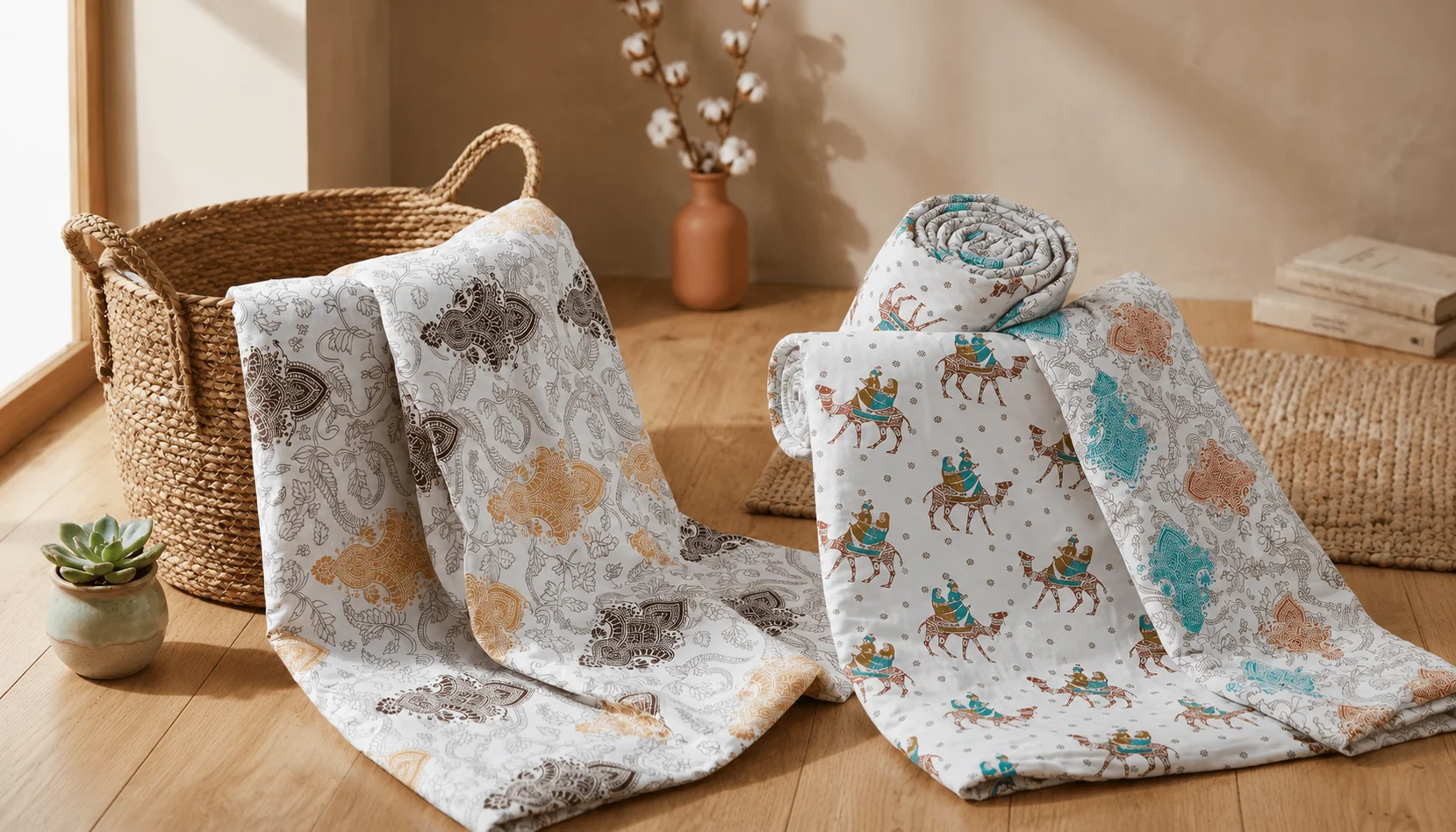
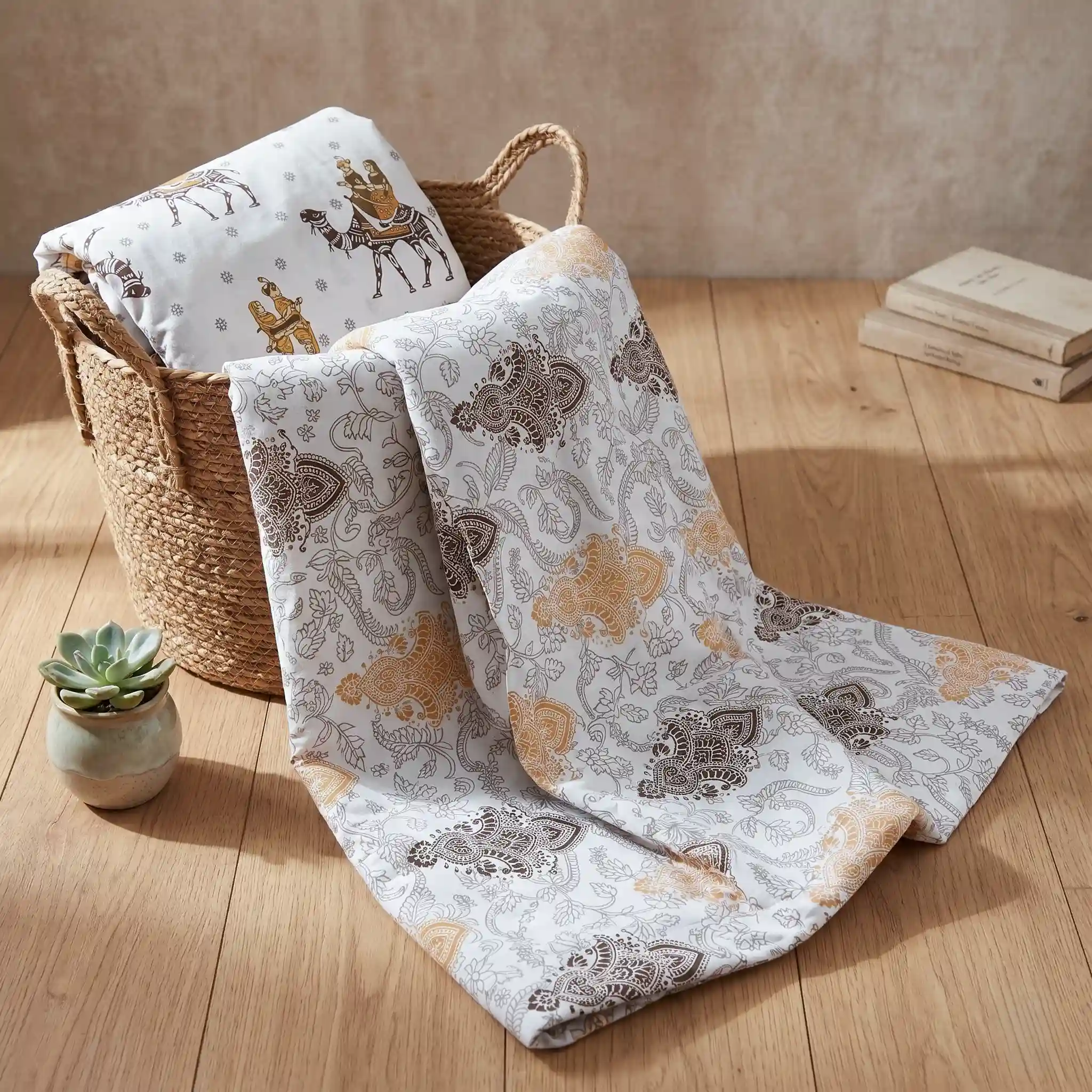
Summer nights can be surprisingly tricky when you sleep with the air conditioner running. You turn on the AC because the room feels hot and uncomfortable, but a few hours later, you find yourself reaching for something to cover up. A thick winter blanket feels excessive, while sleeping without any cover can leave you chilly before morning.
That’s exactly where an AC blanket for summer becomes useful. It gives you enough warmth to stay comfortable in an air-conditioned room without trapping so much heat that you wake up sweating.
Choosing one sounds simple until you start looking at fabrics, weights, weaves, sizes, and other details. Cotton or microfiber? Lightweight or medium weight? Does GSM matter? And how thick should a blanket actually be when your AC runs all night?
The answer depends less on finding the thickest or softest blanket and more on finding the right balance between breathability and warmth.
The Summer Sleep Dilemma Inside an AC Room
An air-conditioned bedroom rarely feels the same throughout the night.
When you first go to bed, your body may still feel warm from the day, so a cool room feels refreshing. As the night progresses, however, your body naturally settles into sleep and the same temperature can begin to feel much cooler.
That's why sleeping directly under a strong AC can become uncomfortable even during the hottest months.
A heavy comforter isn't necessarily the answer. It may keep you warm, but it can also trap too much body heat. You might pull it over yourself when you're cold, kick it away when you're hot, then reach for it again later.
A lighter covering creates a more comfortable middle ground. It provides gentle insulation while still allowing excess heat and moisture to escape.
Why Summer Blankets Feel Different
Not every thin blanket is automatically suitable for an air-conditioned room.
A good summer blanket needs to perform two jobs that seem almost contradictory. It should provide enough insulation to protect you from cool air while remaining breathable enough to prevent overheating.
That balance comes primarily from three things: fabric, construction, and weight.
Breathable fibers allow heat to move away from your body. Moisture management helps prevent that sticky feeling common during humid weather. Meanwhile, the blanket's weight determines how much insulation sits between you and the cooler room air.
The best option usually feels light when you pick it up but comforting once it settles over you.
Fabric Comes First
If you only pay attention to one detail while shopping, make it the fabric.
Two blankets of similar thickness can feel completely different because their fibers handle heat and moisture differently.
Someone who regularly wakes up feeling warm will probably value airflow and moisture absorption. Someone who becomes cold quickly under the AC may prefer a slightly warmer material or tighter construction.
There's no single fabric that's perfect for everybody. Understanding how the common options behave makes the decision much easier.
Cotton for Breathable Everyday Comfort
Cotton is a dependable choice for summer bedding because it offers a practical combination of softness, airflow, and moisture absorption.
It doesn't usually create the heavily insulated feeling associated with winter blankets. Instead, air can circulate through the fabric, which helps regulate the microclimate between your skin and the blanket.
Cotton is particularly useful for people who want a familiar, natural-feeling material without complicated care requirements.
The weave matters too.
Looser, more breathable constructions generally work better for warm sleepers, while denser cotton blankets can provide a little extra warmth for people who keep their bedrooms particularly cool.
Cotton also tends to become more comfortable with regular use, especially when it's washed and cared for correctly.
Its main drawback is that some cotton blankets can feel heavier than synthetic alternatives. They may also take longer to dry after washing.
Still, for everyday summer use, cotton remains one of the easiest materials to live with.
Bamboo for Naturally Cool and Silky Sleep
Bamboo-derived bedding has become popular among people who prefer a smoother and cooler-feeling fabric.
One of its most noticeable qualities is the way it feels against the skin. It's often soft and fluid rather than crisp, making it appealing if you dislike rough or stiff bedding.
It's also valued for moisture management. If you tend to feel warm or slightly sweaty while sleeping, a fabric that moves moisture away from your skin can make the bed feel considerably more comfortable.
Bamboo-based blankets can therefore work particularly well for hot sleepers or humid climates.
There is one thing worth checking before buying, though. Products marketed as bamboo can differ significantly in composition and manufacturing. Read the actual fiber information on the label rather than relying only on the word "bamboo" printed prominently on the packaging.
Microfiber and Blended Fabrics for Lightweight Warmth
Microfiber takes a different approach.
It's a synthetic material made from very fine fibers, which allows manufacturers to create blankets that feel soft and relatively lightweight while still offering noticeable warmth.
That makes microfiber appealing if you get cold easily in an AC room but don't want the bulk of a traditional winter blanket.
It's also generally easy to maintain. Many microfiber products wash easily, dry quickly, and resist wrinkling, making them convenient for regular household use.
The tradeoff is breathability.
Some microfiber blankets retain more heat than natural-fiber alternatives. If you're already a hot sleeper, an overly dense microfiber blanket could leave you uncomfortable.
Blended fabrics sit somewhere in between.
A cotton blend, for example, may combine some of cotton's breathability with the durability and easier maintenance of synthetic fibers. Rather than rejecting blends automatically, check what fibers are actually used and in what proportions.
Understanding Blanket Weight Without the Confusion
Thickness can be misleading.
A fluffy blanket may look warm but weigh surprisingly little. Another blanket may look thin yet have a dense construction that holds considerably more heat.
This is why you'll sometimes see bedding described using GSM.
GSM means grams per square meter. In simple terms, it tells you how much the fabric weighs across a specific area.
A lower GSM generally indicates a lighter fabric, while a higher GSM usually means more material and potentially more warmth.
But GSM shouldn't be treated as a warmth rating by itself.
Fiber type and weave also influence how warm a blanket feels. A dense synthetic blanket and a breathable cotton blanket with similar weights may perform differently once you're actually sleeping under them.
Think of GSM as one useful clue rather than the entire answer.
Match the Weight With Your AC Temperature
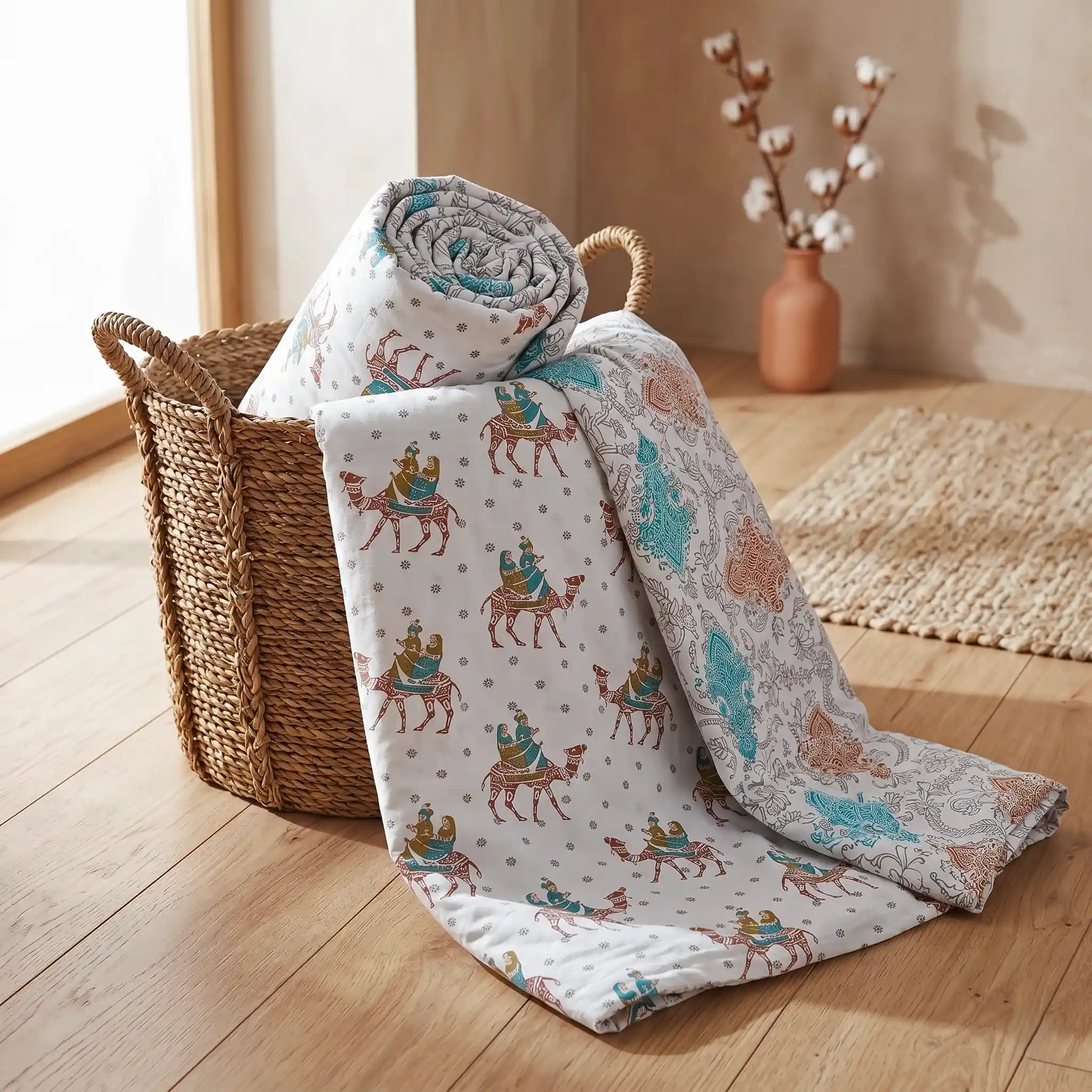
Your thermostat can tell you a lot about the type of blanket you'll enjoy.
If you normally keep the room relatively mild, you probably don't need much insulation. A thin, breathable cotton or bamboo-based layer may be enough to take the edge off the cool air.
If you prefer a colder bedroom, a slightly denser blanket can make more sense.
People who run their AC aggressively throughout the night often need additional warmth, particularly if the bed sits directly in the airflow.
There's another factor that's easy to overlook: fan speed.
A room at a particular temperature can feel noticeably colder when strong air is constantly moving across your body. So don't choose your blanket based on the thermostat number alone. Consider how the room actually feels when you're lying in bed.
The ideal AC blanket for summer should keep you comfortable without making you repeatedly uncover yourself during the night.
Your Sleeping Style Matters More Than You Think
Shopping based solely on weather is one of the easiest ways to choose the wrong bedding.
Your own sleeping habits matter just as much.
Hot sleepers generally benefit from breathable materials, lighter constructions, and good moisture management. If you frequently wake up warm, adding a dense blanket simply because the AC is running probably won't solve the problem.
Cold sleepers can move in the opposite direction. A medium-weight cotton blanket, textured weave, or lightweight microfiber option may provide the extra insulation they need.
Couples have another challenge.
One person may want the AC colder while the other spends half the night wrapped tightly in bedding. In that situation, separate lightweight blankets can sometimes work better than trying to find one covering that magically satisfies both people.
How you sleep matters too. Some people like a blanket tucked firmly around them, while others want a loose layer they can move easily during the night.
Comfort is personal, and your blanket should reflect that.
Size and Weave Quietly Improve Comfort
People spend plenty of time comparing materials and surprisingly little time checking dimensions.
That's a mistake.
A blanket that's technically labeled for your bed size may still provide less coverage than you expect. Mattress depth, whether you're sharing the bed, and how much overhang you prefer can all affect the size you need.
Check actual measurements rather than relying entirely on labels such as single, queen, or king.
Then consider the weave.
An open or loosely woven blanket encourages airflow and often feels cooler. A tighter construction generally retains more warmth. Textured weaves can create small air pockets that add coziness without requiring an extremely thick blanket.
The difference may seem minor in a store, but after several hours of sleep, these details become much more noticeable.
Easy Care Means Longer Lasting Comfort
A great blanket isn't particularly useful if caring for it becomes a chore.
Summer bedding tends to need regular washing because sweat, skin oils, dust, and everyday use gradually accumulate in the fibers.
Always start with the manufacturer's care instructions.
In general, overly harsh washing and excessive heat can affect softness, shrink certain natural fabrics, or damage fibers over time. Gentle washing and appropriate drying usually help preserve the original feel.
Make sure the blanket is completely dry before storing it. Trapped moisture can create unpleasant odors and make bedding feel stale when you pull it out again.
Storage matters as well.
Keep clean blankets in a dry, ventilated place rather than compressing them into a damp corner for months. A little care between seasons can add years to a good piece of bedding.
Common Buying Mistakes
The biggest mistake is assuming thicker automatically means better.
You're trying to stay comfortable under air conditioning, not prepare for freezing winter weather. Too much insulation can create the exact problem you're trying to avoid.
Another common mistake is shopping by appearance alone.
A plush blanket may look incredibly comfortable in photographs, but its dense fibers might trap more heat than you want. Likewise, an extremely thin blanket might not provide enough protection if your AC runs at a low temperature all night.
Ignoring fabric composition is another problem. Marketing names can sound impressive, but the fiber label tells you much more about what you're actually buying.
Then there's size.
Buying a blanket that's barely large enough for the mattress often leads to midnight tug-of-war, especially for couples.
Finally, don't obsess over a single specification. GSM, material, weave, dimensions, and your sleeping habits all work together.
Finding the Balance Between Coolness and Coziness
Choosing an AC blanket for summer becomes much simpler once you stop looking for a universally perfect option.
Start with yourself.
Do you usually sleep hot or cold?
Next, think about your bedroom. How cool do you keep the AC, and does the airflow hit the bed directly?
Then choose your fabric. Cotton is a strong all-round option when breathability and familiar comfort matter. Bamboo-derived fabrics can appeal to warm sleepers who enjoy a smooth, moisture-friendly feel. Microfiber can work well when easy care and slightly greater warmth are priorities.
After that, consider weight and weave.
You don't necessarily need the lightest blanket you can find. You need one light enough to release excess heat but substantial enough to prevent cool air from becoming uncomfortable.
Finally, check the dimensions and washing instructions before buying.
Those simple steps tell you far more than an attractive product photo ever will.
A Better Way to Sleep Through Summer
The best summer bedding often goes unnoticed.
You shouldn't spend the night thinking about whether your blanket is too warm, too cold, too heavy, or constantly slipping away. Good bedding simply lets you settle in and sleep.
That's why fabric and weight deserve more attention than thickness alone.
Choose breathable construction if you sleep warm. Add a little more weight if the AC makes you cold. Pay attention to airflow, weave, size, and maintenance instead of chasing whatever material happens to be trending.
Once those pieces come together, you get something much more useful than another blanket in the cupboard. You get a comfortable layer that makes cool, air-conditioned summer nights genuinely restful.
Share Article